
At a glance
Key facts
Figures reviewed:
- Typical LTV (Dutch non-resident)
- 60–70%Of the lower of purchase price or tasación valuation.
- Indicative fixed rates
- Approx. 2.80% – 3.90% p.a.Indicative non-resident pricing from Clifton International's Spanish lender panel, reviewed July 2026. Not a rate offer.
- Indicative mixed rates
- Approx. 2.50% – 3.40% p.a. initial period
- Variable margin
- 12-month Euribor + 0.90% – 1.75%
- Affordability test
- c.35% of gross incomeDutch hypotheek re-modelled as fully amortising, even if aflossingsvrij.
- Acquisition costs
- 10–14% of priceITP 10% in the Comunidad Valenciana; 10% IVA plus 1.5% AJD on new build.
- Typical timeline
- 6–8 weeks10–12 weeks for ZZP or BV structures. Where speed is required consider short term bridging finance to secure the property.
- Non-resident income tax
- 19% IRNR (EU rate)
Indicative figures for guidance only, correct as at July 2026. Rates, costs and timelines vary by lender, borrower profile, asset and jurisdiction, and are not an offer of finance. How we derive these figures.
Methodology and assumptions
- Figures are compiled by Clifton International specialists from live lender term sheets, indicative quotes and completed transactions arranged over the preceding 12 months.
- Rates and costs are stated as ranges rather than a single number because pricing is set case-by-case on borrower profile, residency, asset type, location and loan-to-value.
- Timelines assume a complete document file from the outset; valuation, legal capacity and (in Spain) NIE and notary availability drive the critical path.
- Costs exclude any lender, broker or third-party fees not stated on the page, and exclude currency movement between agreement and drawdown.
- Figures are reviewed at least quarterly and re-checked against lender pricing whenever a material market change occurs.
Last reviewed . Read the full Key facts methodology, or speak to our team for a quote based on your circumstances.
Can Dutch residents get a mortgage in Spain?
Yes. Dutch residents can borrow against Spanish property as EU non-residents. Euro income and EU residency place them in the top loan-to-value band — typically 60–70% of purchase price or valuation, whichever is lower — on the broadest available Spanish lender panel, with completion usually taking six to eight weeks.
- 60–70% LTV for loondienst, ZZP and DGA applicants with documented income.
- An aflossingsvrije (interest-only) Dutch hypotheek is re-modelled as fully amortising in Spanish affordability.
- No currency risk — income and loan are both euro-denominated.
- The Spanish property is reportable in Dutch Box 3, with treaty relief against double taxation.
Key takeaways
- Dutch buyers routinely secure 60–70% LTV as EU non-residents.
- EUR income; no currency risk and the widest lender panel available.
- An interest-only Dutch hypotheek (aflossingsvrij) is treated as fully amortising by Spanish underwriters — a common surprise.
- Box 3 wealth reporting in the Netherlands must include the Spanish property; treaty relief is available.
- Costa Blanca and Costa del Sol are the primary corridors; timelines of 6–8 weeks are standard.
Dutch buyers versus non-EU buyers in Spain
EU residency and euro income are the two factors that most widen the Spanish lender panel.
| Factor | Dutch buyer | Non-EU buyer (US / GCC) |
|---|---|---|
| Typical LTV | 60–70% | 50–65% |
| Lender pool | Broad — most Spanish retail banks | Narrow — international desks only |
| Income currency | EUR, no discount | USD/AED, discounted 10–30% |
| Non-resident income tax (IRNR) | 19% (EU rate) | 24% |
| Typical timeline | 6–8 weeks | 8–12 weeks |
Swipe the table sideways to see all columns.
Indicative figures only. Actual terms depend on borrower profile, asset and lender criteria.
How much can Dutch buyers borrow?
As EU residents, Dutch applicants can typically reach the top of the non-resident LTV band — 60–70% of the lower of purchase price or valuation on residential deals. Employed CDI-equivalent income, DGA salary and reliably documented ZZP earnings all qualify.
Affordability is stress-tested to c.35% of gross monthly income including all worldwide debt service. This is where Dutch aflossingsvrije hypotheken (interest-only) can catch borrowers out — Spanish underwriters typically re-model them as fully amortising over the remaining term when computing DTI, which reduces borrowing capacity.
Documents required
- Paspoort or ID-kaart, plus NIE.
- Last 3 salarisstroken and jaaropgave.
- ZZP / DGA: last 2–3 years belastingaangiften plus jaarrekeningen.
- Last 6 months of bankafschriften (all accounts and savings).
- Aflossingsschema of current Dutch hypotheek.
- BKR-registratie report as supporting evidence.
- Sworn Spanish translation of statutory documents.
Dutch and Spanish tax interaction
- Spain and the Netherlands have a double-tax treaty; Spanish rental income is taxed in Spain first, with credit available in the Netherlands.
- Spanish IRNR at 19% (EU rate) applies to rental and imputed income for non-residents.
- The Spanish property is reportable in Dutch Box 3 (vermogen), with treaty exemption to avoid double taxation.
- Regional Spanish wealth tax (Patrimonio) can apply — Valencia, Balearics and Catalonia are material examples.
End-to-end process
- Week 1–2: Fact-find, indicative terms, EU-lender shortlist.
- Week 2–3: NIE, formal application, opening underwriting.
- Week 3–5: Tasación and credit committee approval.
- Week 5–7: FEIN/FiAE offer; 10-day cooling-off.
- Week 7–8: Notary and escritura pública.
Where Dutch buyers purchase
The northern Costa Blanca — Javea, Denia, Moraira, Altea and Calpe — remains the core Dutch corridor, supported by direct Amsterdam and Eindhoven flights into Alicante and Valencia. The Costa del Sol is the growth market for higher-value purchases, and the Balearics attract Dutch buyers at the prime end.
Asset type drives lender appetite more than location: villas on rústica land, properties lacking a current cédula de habitabilidad, and off-plan new builds each need specific lender selection. Touristic-licensed (VUT) apartments are underwritten as investment stock rather than as second homes.
Bridging and renovation finance
Where a Spanish purchase must complete before a Dutch property sells, or where a renovation needs funding before a term mortgage can be placed, short-term bridging secured on the Spanish asset is the standard route. Indicative pricing is 0.7–0.9% per month to a maximum 65% LTV, with a documented exit — sale, refinance, or liquidity event.
Larger renovation and subdivision projects move into development finance, assessed on loan-to-cost and loan-to-GDV rather than personal income, with the licencia de obra as the gating item.
Purchase costs and cash required
Allow 10–14% of the purchase price in acquisition costs on top of the deposit. On a resale the main item is regional transfer tax (ITP), 6–10% depending on the autonomous community — 10% in the Comunidad Valenciana, where most Dutch purchases sit. New builds attract 10% IVA plus 1.5% AJD.
- Notary and land registry: c.0.5–1%.
- Legal fees: c.1% plus VAT, usually with a Dutch-speaking abogado.
- Lender arrangement fee: 0.5–1.5%; tasación €400–€900.
- Annual running costs: IBI, community fees, home insurance and non-resident IRNR filings.
On a €450,000 Javea resale at 65% LTV, budget roughly €157,500 deposit plus €50,000–€63,000 of costs.
What rate will a Dutch buyer pay?
Dutch applicants price on the standard Spanish non-resident grid. Indicative fixed pricing is 2.80% – 3.90% p.a. over 10–25 years, mixed products open at 2.50% – 3.40% p.a. for the initial fixed period, and variable products track 12-month Euribor plus 0.90% – 1.75%.
Spanish fixed terms are shorter than the 20- and 30-year fixes common in the Netherlands, and Spanish products are capital-and-interest rather than aflossingsvrij. Bundled insurance and a Spanish direct debit can reduce the margin — compare total cost, not the headline discount. Indicative non-resident pricing from Clifton International's Spanish lender panel, reviewed July 2026. Not a rate offer.
A Costa Blanca case study
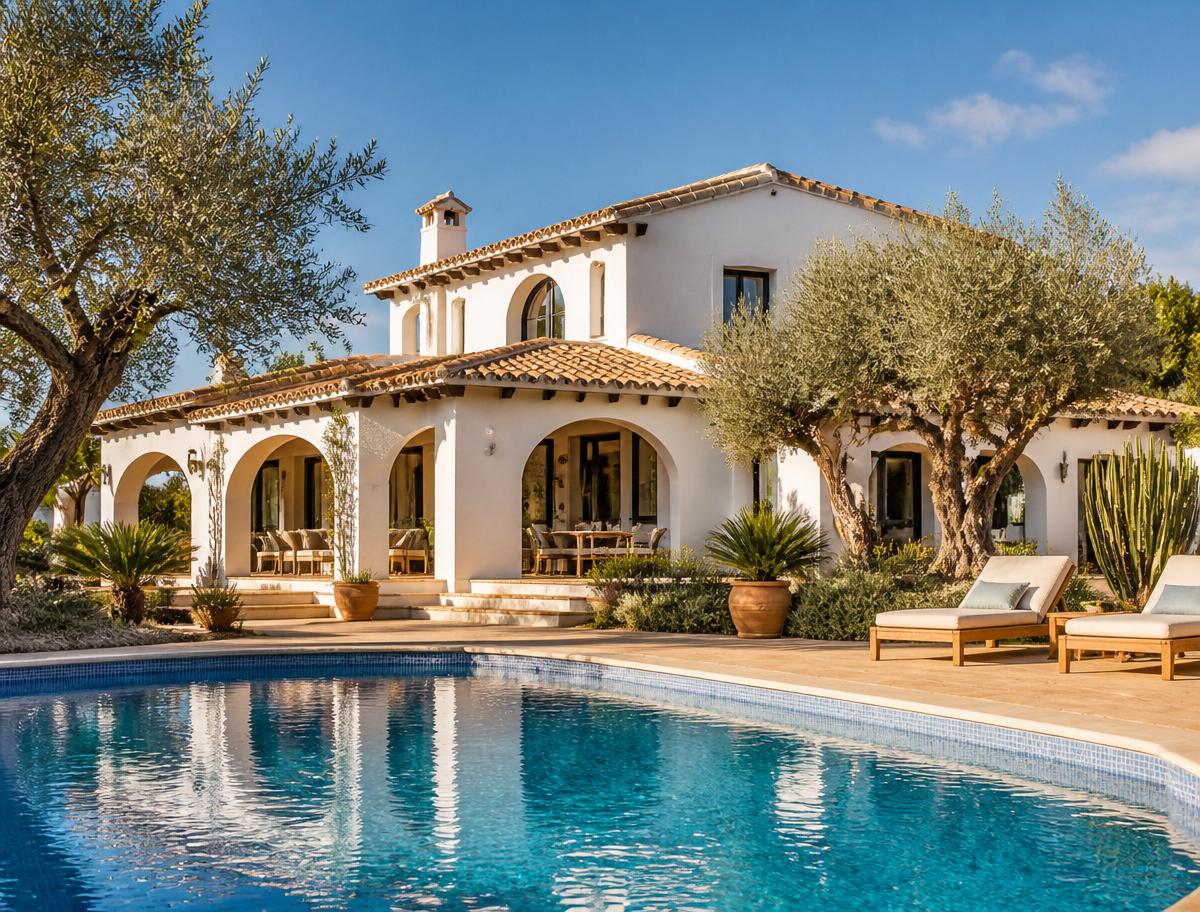
Below market value bridge purchase, Javea
€300k bridge · 12-month term · interest retained
UAE-based British citizens needed short-term funding to secure a holiday home in Javea at below market value, with the intention to refinance onto a longer-term mortgage once the purchase completed.
We introduced a Spain-based private funder who provided a 12-month bridge, structured against the estimated open-market value and with a clear refinance exit.
- Purchase completed inside the vendor's deadline on the northern Costa Blanca
- Exited onto a term Spanish mortgage once full underwriting completed
- Mirrors the route used where a Dutch home has not yet sold
Five mistakes that cost Dutch buyers time
- Budgeting on the aflossingsvrij monthly cost. Spanish underwriters re-model it as fully amortising, which cuts borrowing capacity.
- Leaving the NIE to the last minute. It gates the application, the bank account and the notary.
- Assuming a Dutch bank will lend on Spanish collateral. They generally will not — the loan is arranged in Spain.
- Buying a VUT-licensed apartment expecting second-home terms. It is underwritten as investment stock.
- Signing a reserva with no finance condition. Without a subject-to-mortgage clause the deposit is at risk.
Frequently asked
Questions from readers
Will my Dutch aflossingsvrije hypotheek reduce my Spanish borrowing?
Yes — Spanish underwriters typically re-model interest-only Dutch mortgages as fully amortising when computing DTI, which reduces borrowing capacity versus the actual monthly cost you pay in the Netherlands.
Do I need a BKR-registratie for the Spanish application?
It's not scored, but a clean BKR extract is useful supporting evidence of credit conduct.
Can I finance a holiday let on the Costa Blanca?
Yes, but check the municipal licence status of the target property. Without an active vivienda de uso turístico (VUT) licence, the loan will be underwritten as a second home, not as an investment.
Is my Spanish property reportable in Box 3?
Yes, at its WOZ-equivalent value, with treaty relief to prevent double taxation. Coordinate with your Dutch tax adviser.
How long does completion take?
6–8 weeks is typical for a prepared Dutch file. Complex ZZP or corporate cases can extend to 10–12 weeks.
What deposit do Dutch buyers need?
Plan on 30–40% of the purchase price plus 10–14% in taxes and costs. On a €450,000 Costa Blanca resale at 65% LTV that is roughly €157,500 deposit and €50,000–€63,000 of costs.
Can I bridge a Spanish purchase before my Dutch home sells?
Yes. Short-term bridging secured on the Spanish property is commonly used where the completion date precedes a sale. Expect 0.7–0.9% per month to a maximum 65% LTV, with the sale or a term refinance as the documented exit.
Is interest-only available on a Spanish mortgage?
Not usually on retail non-resident terms, which are capital and interest. Interest-only is realistic through international private banks, generally above €1m and with an assets-under-management relationship.
Should I choose a fixed or Euribor-linked rate?
Spanish fixed rates suit buyers holding long-term and remove Euribor exposure. Variable can suit an expected early repayment, since Spanish law caps early-repayment compensation on variable loans at low levels.
Do I need a Spanish bank account?
Yes. Mortgage payments, IBI, community fees and utilities are all collected by direct debit from a Spanish account, and lenders require one before completion.
Can I buy through a Dutch BV or a Spanish SL?
Both are possible but narrow the lender panel and require full UBO disclosure. They also change Box 2 / Box 3 treatment at home, so take Dutch and Spanish tax advice before structuring.
What rate will I pay as a Dutch non-resident?
Indicative non-resident pricing is 2.80% – 3.90% p.a. fixed over 10–25 years, 2.50% – 3.40% p.a. for the initial period on a mixed product, or 12-month Euribor plus 0.90% – 1.75% on a variable. Indicative non-resident pricing from Clifton International's Spanish lender panel, reviewed July 2026. Not a rate offer.
Can I complete without travelling to Spain?
Yes. A volmacht (power of attorney) signed before a Dutch notary and apostilled lets your Spanish abogado sign the escritura for you. Most Dutch buyers use this rather than making a second trip.
Can I raise the money against my Dutch home instead?
Sometimes. Increasing a Dutch hypotheek can be cheaper, but Dutch renteaftrek does not apply to funds used for a Spanish second home, and it uses Dutch borrowing capacity. Compare it against a euro Spanish mortgage secured on the Spanish property before deciding.
How does Spanish succession tax affect Dutch owners?
Spanish ISD is charged where the property is situated and the Netherlands has no succession treaty with Spain, so a Spanish will limited to Spanish assets and early advice on regional ISD reliefs both matter.