
At a glance
Key facts
Figures reviewed:
- Typical LTV (Polish non-resident)
- 60–70%Of the lower of purchase price or tasación valuation.
- Indicative fixed rates
- Approx. 2.80% – 3.90% p.a.Indicative non-resident pricing from Clifton International's Spanish lender panel, reviewed July 2026. Not a rate offer.
- Indicative mixed rates
- Approx. 2.50% – 3.40% p.a. initial period
- Variable margin
- 12-month Euribor + 0.90% – 1.75%
- FX discount on PLN income
- 10–20%Not applied where income is already euro-denominated.
- Affordability test
- c.35% of gross incomeExisting Polish kredyt hipoteczny payments count in full.
- Acquisition costs
- 10–14% of priceITP 7% in Andalucía, 10% in the Comunidad Valenciana.
- Non-resident income tax
- 19% IRNR (EU rate)
Indicative figures for guidance only, correct as at July 2026. Rates, costs and timelines vary by lender, borrower profile, asset and jurisdiction, and are not an offer of finance. How we derive these figures.
Methodology and assumptions
- Figures are compiled by Clifton International specialists from live lender term sheets, indicative quotes and completed transactions arranged over the preceding 12 months.
- Rates and costs are stated as ranges rather than a single number because pricing is set case-by-case on borrower profile, residency, asset type, location and loan-to-value.
- Timelines assume a complete document file from the outset; valuation, legal capacity and (in Spain) NIE and notary availability drive the critical path.
- Costs exclude any lender, broker or third-party fees not stated on the page, and exclude currency movement between agreement and drawdown.
- Figures are reviewed at least quarterly and re-checked against lender pricing whenever a material market change occurs.
Last reviewed . Read the full Key facts methodology, or speak to our team for a quote based on your circumstances.
Can Polish residents get a mortgage in Spain?
Yes. Polish residents borrow as EU non-residents, typically at 60–70% of the lower of purchase price or valuation. EU residency keeps the lender panel broad and IRNR at 19%, but zloty income is discounted around 10–20% because the loan is euro-denominated. Allow six to ten weeks to completion.
- 60–70% LTV for umowa o pracę, B2B and spółka-director applicants with documented income.
- PLN income is usually discounted 10–20%; EUR-earning applicants avoid the haircut entirely.
- EU status keeps IRNR at 19% with deductible expenses on rental income.
- A BIK report and two years of PIT filings are the core supporting documents.
Key takeaways
- Polish buyers routinely secure 60–70% LTV as EU non-residents.
- PLN income is typically discounted 10–20% because the loan is euro-denominated.
- IRNR stays at the 19% EU rate, with mortgage interest and running costs deductible against rental income.
- A clean BIK report and two years of PIT filings materially speed up underwriting.
- Costa Blanca and Costa del Sol are the primary corridors; allow 6–10 weeks to completion.
Polish buyers versus non-EU buyers in Spain
EU residency widens the lender panel and lowers the tax rate; the zloty is the one factor that still costs Polish applicants borrowing capacity.
| Factor | Polish buyer | Non-EU buyer (US / GCC) |
|---|---|---|
| Typical LTV | 60–70% | 50–65% |
| Lender pool | Broad — most Spanish retail banks | Narrow — international desks only |
| Income currency | PLN, discounted 10–20% | USD/AED, discounted 10–30% |
| Non-resident income tax (IRNR) | 19%, with deductible expenses | 24%, no deduction |
| Typical timeline | 6–10 weeks | 8–12 weeks |
Swipe the table sideways to see all columns.
Indicative figures only. Actual terms depend on borrower profile, asset and lender criteria.
How much can Polish buyers borrow?
As EU residents, Polish applicants reach the top of the non-resident band — 60–70% of the lower of purchase price or valuation, over terms up to 25 years and generally to age 75. Umowa o pracę income, B2B contracting and spółka z o.o. director remuneration are all acceptable when documented.
Affordability is stress-tested at around 35% of gross monthly income including worldwide debt service, so an existing Polish kredyt hipoteczny counts in full. B2B and self-employed applicants should expect to provide two to three years of filings.
Zloty income and currency treatment
Poland is in the EU but outside the euro, so a Polish file combines the best of EU treatment with a currency haircut. Lenders typically discount PLN income by 10–20% before running affordability, to absorb EUR/PLN volatility over a 20–25 year term.
Applicants already paid in euros — common among IT contractors and multinational employees — avoid the discount entirely, which is often worth more borrowing capacity than any rate negotiation. Under the EU Mortgage Credit Directive you also retain the right to convert loan currency if EUR/PLN moves materially against you.
Documents required
- Polish passport or dowód osobisty, plus NIE.
- Zaświadczenie o zarobkach and last three payslips for employed applicants.
- Last two years of PIT-37 / PIT-36 / PIT-36L filings with UPO confirmation.
- B2B or spółka: two to three years of accounts plus ZUS and US confirmations.
- Last six months of statements for all Polish accounts.
- BIK credit report, plus the amortisation schedule for any Polish mortgage.
- Sworn Spanish translation (tłumaczenie przysięgłe) of statutory documents.
Polish and Spanish tax interaction
- The Poland–Spain double-tax treaty gives Spain first taxing rights on Spanish property income, with relief available in Poland.
- Spanish IRNR is charged at 19% for EU residents, with mortgage interest, IBI, community fees and repairs deductible pro rata to the days let.
- If the property is not let, an annual imputed income charge applies via Modelo 210.
- Polish residents remain subject to worldwide income reporting; coordinate the Spanish filing with your Polish doradca podatkowy.
- Regional Spanish wealth tax (Patrimonio) can apply — Andalucía effectively exempts it, the Balearics and Catalonia do not.
End-to-end process
- Week 1–2: Fact-find, indicative terms, EU-lender shortlist.
- Week 2–4: NIE, translations, formal application.
- Week 4–6: Tasación and credit committee approval.
- Week 6–8: FEIN/FiAE offer; 10-day cooling-off.
- Week 8–10: Notary and escritura pública.
Where Polish buyers purchase
The southern Costa Blanca — Torrevieja, Orihuela Costa, Guardamar and Alicante — dominates Polish demand, supported by direct flights from Warsaw, Kraków, Katowice and Wrocław. Typical budgets run €180,000–€450,000 for new-build apartments and townhouses.
The Costa del Sol takes the higher-value share around Estepona, Malaga and Marbella, while Barcelona and the Balearics attract a smaller prime-focused group where private-bank routes can be the better fit.
What rate will a Polish buyer pay?
Polish applicants price on the standard Spanish non-resident grid. Indicative fixed pricing is 2.80% – 3.90% p.a. over 10–25 years, mixed products open at 2.50% – 3.40% p.a. for the initial fixed period, and variable products track 12-month Euribor plus 0.90% – 1.75%.
Euro pricing is materially below typical WIBOR-linked Polish mortgage rates, which is often the headline surprise for Polish buyers — but the comparison only holds if you can absorb EUR/PLN movement on the monthly payment. Bundled insurance and a Spanish direct debit reduce the margin; compare total cost, not the headline discount. Indicative non-resident pricing from Clifton International's Spanish lender panel, reviewed July 2026. Not a rate offer.
A Costa Blanca case study
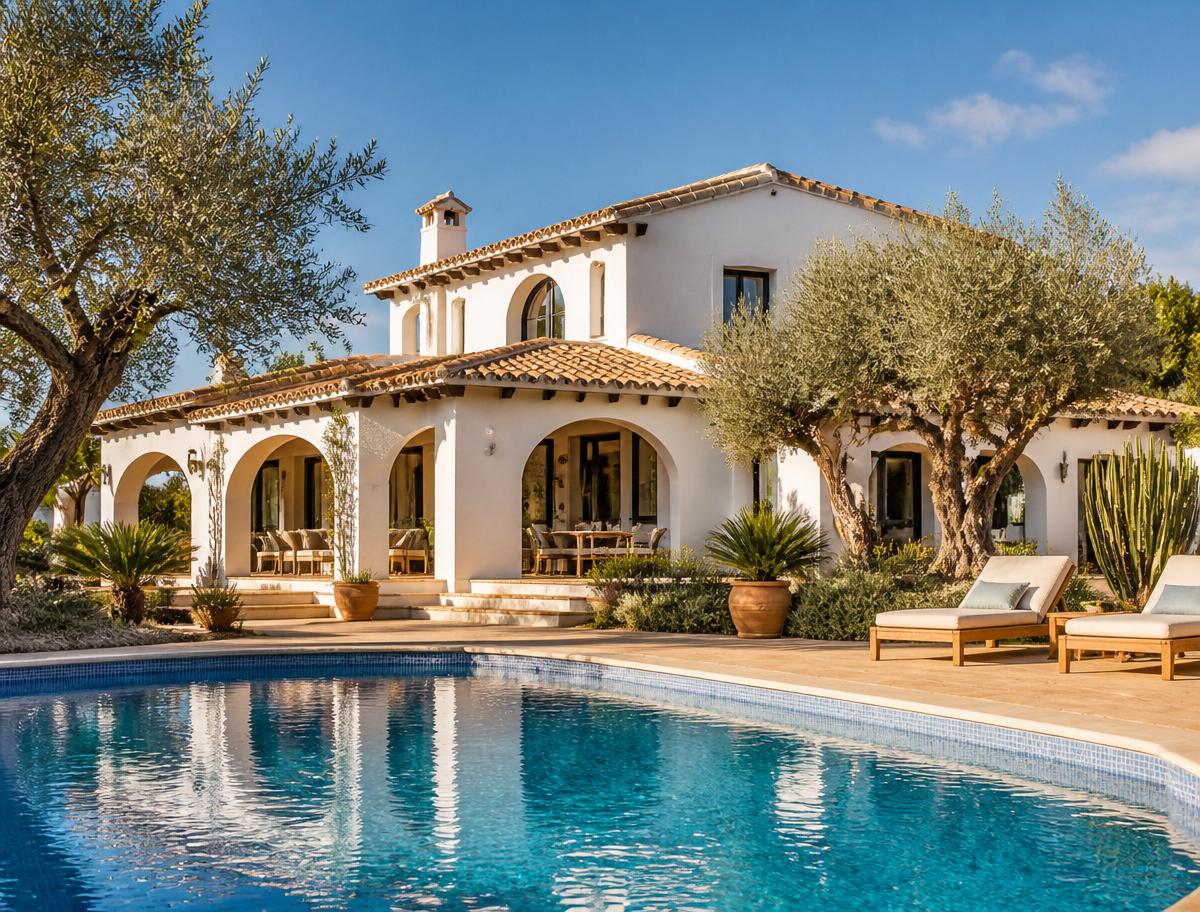
Below market value bridge purchase, Javea
€300k bridge · 12-month term · interest retained
UAE-based British citizens needed short-term funding to secure a holiday home in Javea at below market value, with the intention to refinance onto a longer-term mortgage once the purchase completed.
We introduced a Spain-based private funder who provided a 12-month bridge, structured against the estimated open-market value and with a clear refinance exit.
- Purchase completed inside the vendor's deadline on the northern Costa Blanca
- Exited onto a term Spanish mortgage once full underwriting completed
- Mirrors the route used where a Polish sale or liquidity event lands later
Five mistakes that cost Polish buyers time
- Budgeting on undiscounted PLN income. A 10–20% haircut is applied before affordability, cutting the achievable loan.
- Underestimating translation lead times. Sworn Spanish translations of Polish documents routinely add a week.
- Leaving the NIE to the last minute. It gates the application, the bank account and the notary.
- Assuming a Polish bank will lend on Spanish collateral. They will not — the loan is arranged in Spain.
- Buying off-plan without checking the bank guarantee. Spanish law requires developer deposits to be protected by an aval bancario.
Frequently asked
Questions from readers
How much deposit does a Polish buyer need?
Plan on 30–40% of the purchase price plus 10–14% in taxes and costs. On a €300,000 Costa Blanca new build at 65% LTV that is roughly €105,000 deposit and €30,000–€42,000 of costs.
Is PLN income accepted by Spanish lenders?
Yes. EU residency keeps the panel broad, but expect a 10–20% discount on the zloty figure before affordability is tested, because the loan itself is in euros.
Is a Spanish euro mortgage cheaper than a Polish one?
Usually, in nominal rate terms — euro non-resident pricing typically sits well below WIBOR-linked Polish rates. The trade-off is EUR/PLN exposure on every monthly payment if you earn in zloty.
Do Spanish lenders check BIK?
Not directly, but a clean BIK extract is standard supporting evidence of credit conduct and speeds underwriting considerably.
Will my Polish mortgage reduce what I can borrow in Spain?
Yes. Spanish underwriters include worldwide debt service in the c.35% debt-to-income calculation, so your Polish monthly payment reduces Spanish capacity directly.
What rate will I pay as a Polish non-resident?
Indicative non-resident pricing is 2.80% – 3.90% p.a. fixed over 10–25 years, 2.50% – 3.40% p.a. for the initial period on a mixed product, or 12-month Euribor plus 0.90% – 1.75% on a variable. Indicative non-resident pricing from Clifton International's Spanish lender panel, reviewed July 2026. Not a rate offer.
How long does completion take?
6–10 weeks for a prepared Polish file. B2B and company structures, or slow sworn translations, push it towards 12 weeks.
Can I complete without travelling to Spain?
Yes. A pełnomocnictwo (power of attorney) signed before a Polish notary and apostilled lets your Spanish abogado sign the escritura on your behalf.
Can I finance a holiday let on the Costa Blanca?
Yes, where the property holds an active vivienda de uso turístico registration. Without one, the loan is underwritten as a second home rather than investment stock.
Is interest-only available on a Spanish mortgage?
Not usually on retail non-resident terms, which are capital and interest. Interest-only is realistic through international private banks, generally above €1m and with an assets-under-management relationship.
Do I need a Spanish bank account?
Yes. Mortgage payments, IBI, community fees and utilities are collected by direct debit from a Spanish account, and lenders require one before completion.
Is bridging available to Polish buyers?
Yes. Short-term finance secured on the Spanish property is used where a purchase deadline precedes a Polish sale or business liquidity event. Expect 0.7–0.9% per month to a maximum 65% LTV, plus an arrangement fee of 2%–5% dependent on project scenario.
What should I check when buying off-plan?
Confirm the developer holds a licencia de obra and that your staged deposits are covered by a bank guarantee (aval bancario) under Ley 38/1999. Mortgage funds are only released at completion.
How does Spanish succession tax affect Polish owners?
Spanish ISD is charged where the property is situated, and regional reliefs vary widely. A Spanish will limited to Spanish assets, coordinated with Polish estate planning, is the standard approach.